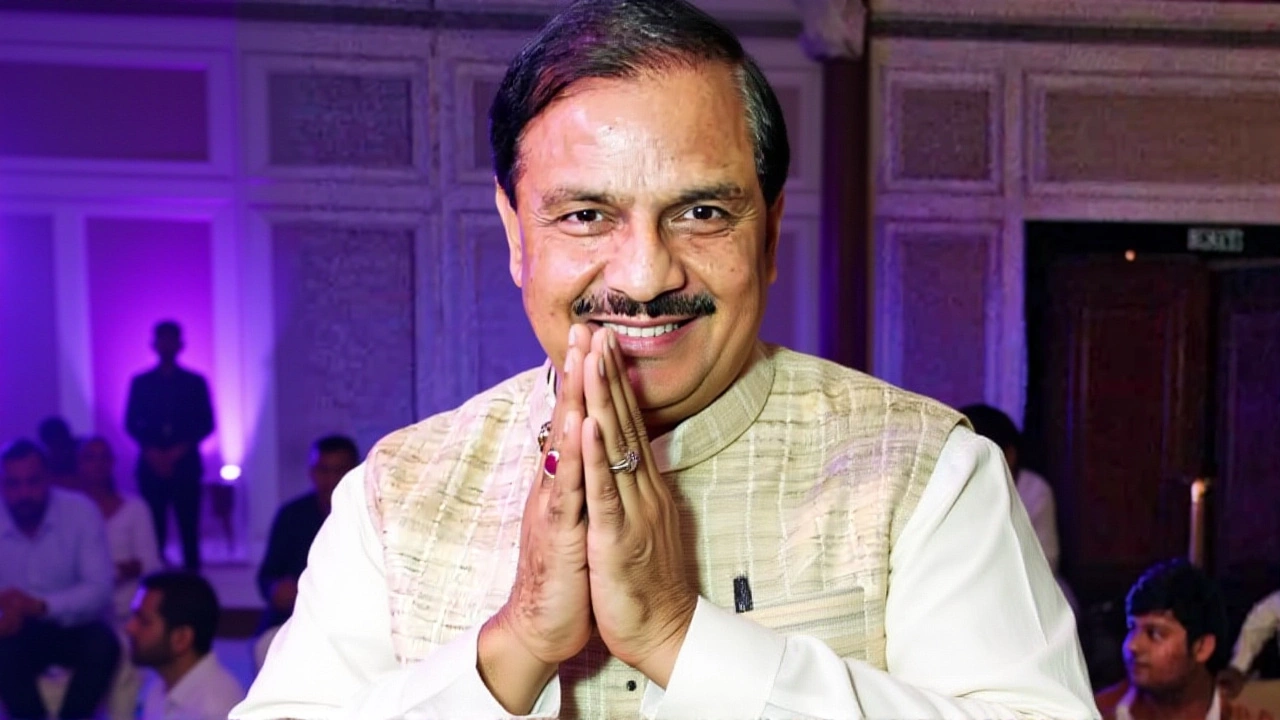
When Dr Mahesh Sharma, Member of Parliament for Bharatiya Janata Party, issued a formal press release calling for calm regarding the controversial Citizenship Amendment Act, it sent ripples through his constituency in Gautam Buddha Nagar. The appeal, distributed via local media outlets like 'Grenonews', wasn't just a routine political statement. It was a direct attempt to de-escalate tensions surrounding one of India's most polarizing laws.
Here’s the thing: The CAA has been a flashpoint for protests and legal battles since its passage in 2019. For an MP who served as a Union Minister under Prime Minister Narendra Modi, stepping in now suggests that ground-level sentiment remains volatile. The details of the specific incident triggering this appeal are still unclear, but the timing is significant.
The Context Behind the Appeal
Dr Mahesh Sharma isn't a newcomer to high-stakes politics. Elected from Gautam Buddha Nagar in Uttar Pradesh during the 2014 general elections, he brings experience from the highest levels of government. He previously held independent charge as State Minister for Culture, Tourism, and Civil Aviation. That administrative background gives his words weight, especially when addressing complex legislative issues.
The Citizenship Amendment Act (CAA), 2019, amended the original Citizenship Act of 1955. Its primary goal? To fast-track citizenship for six non-Muslim religious communities—Hindus, Sikhs, Buddhists, Jains, Parsis, and Christians—who fled persecution in Pakistan, Afghanistan, and Bangladesh before December 31, 2014. If you didn't have valid travel documents, the law offered a path to Indian citizenship.
But wait. The exclusion of Muslims from this provision sparked widespread debate. Critics argued it violated secular principles, while supporters claimed it protected persecuted minorities. In 2024, the government finally notified the rules under Section 6B of the Citizenship Act, operationalizing the application process. This move reignited discussions, likely prompting Sharma’s intervention.
A History of Intervention
Sharma has a track record of engaging with sensitive law-and-order matters. Back in October 2016, following the death of Ravish Sisodia in police custody during the Dadri communal violence case, Sharma personally visited Sisodia’s family home to express condolences. That visit showed he doesn’t shy away from controversial situations.
This pattern of engagement makes his current peace appeal more than just PR. It reflects a strategy of community stabilization. By issuing a formal press note, he aimed to reach constituents directly, urging them to maintain harmony amidst the legal complexities of the CAA.
National Policy vs. Local Sentiment
Beyond the CAA, Sharma remains active on national policy fronts. During a Lok Sabha discussion on March 22, 2022, regarding the Ministry of Civil Aviation’s demands for grants, he highlighted the success of the ‘Udan’ scheme. He noted that 65 airports had been connected, facilitating affordable air travel for economically weaker sections.
“The government’s vision is to expand these connections by 2024,” he stated, citing figures of approximately 170,000 flights carrying nearly 8.78 million passengers. These statistics underscore his focus on developmental narratives alongside social stability. Yet, the CAA issue cuts deeper into identity politics than aviation infrastructure ever could.

What’s Next for Gautam Buddha Nagar?
The immediate impact of Sharma’s appeal depends on how local communities respond. With the CAA rules now in effect, applications may begin flowing, potentially bringing both relief to eligible refugees and anxiety to those feeling excluded. Sharma’s role will likely shift from appeasement to facilitation, helping residents navigate the new bureaucratic processes.
Observers will be watching closely. Will this peace appeal hold, or will underlying tensions resurface? The answer lies not just in Delhi’s corridors of power, but in the streets of Noida and Greater Noida, where Sharma represents millions of voters.
Frequently Asked Questions
Who is Dr Mahesh Sharma?
Dr Mahesh Sharma is the Member of Parliament representing the Gautam Buddha Nagar constituency in Uttar Pradesh. A former Union Minister for Culture, Tourism, and Civil Aviation, he was elected to the 16th Lok Sabha in 2014 on a Bharatiya Janata Party ticket. Before entering full-time politics, he worked as a medical doctor.
What is the Citizenship Amendment Act (CAA)?
The CAA, passed in 2019, amends the Citizenship Act of 1955 to provide a faster path to Indian citizenship for non-Muslim religious minorities from Pakistan, Afghanistan, and Bangladesh who entered India before December 31, 2014. It excludes Muslims from this benefit, which has been the subject of intense national debate and legal challenges.
Why did Dr Mahesh Sharma issue a peace appeal?
Sharma issued the appeal to maintain communal harmony in his constituency amid ongoing controversies surrounding the CAA. The notification of implementation rules in 2024 likely renewed public discourse and tension, prompting him to urge citizens to stay calm and avoid unrest through a formal press release.
How does the Udan scheme relate to Dr Sharma’s work?
As a former Minister of Civil Aviation, Sharma actively promoted the Udan (UDAN) regional connectivity scheme. In parliamentary discussions, he highlighted that the program had connected 65 airports and carried nearly 8.78 million passengers, aiming to make air travel affordable for common citizens in smaller cities.
When were the CAA rules notified?
The rules for implementing the Citizenship Amendment Act were notified by the Indian government in 2024. This notification established the procedural framework for eligible refugees to apply for citizenship under Section 6B of the Citizenship Act, moving the law from statute to actionable policy.